
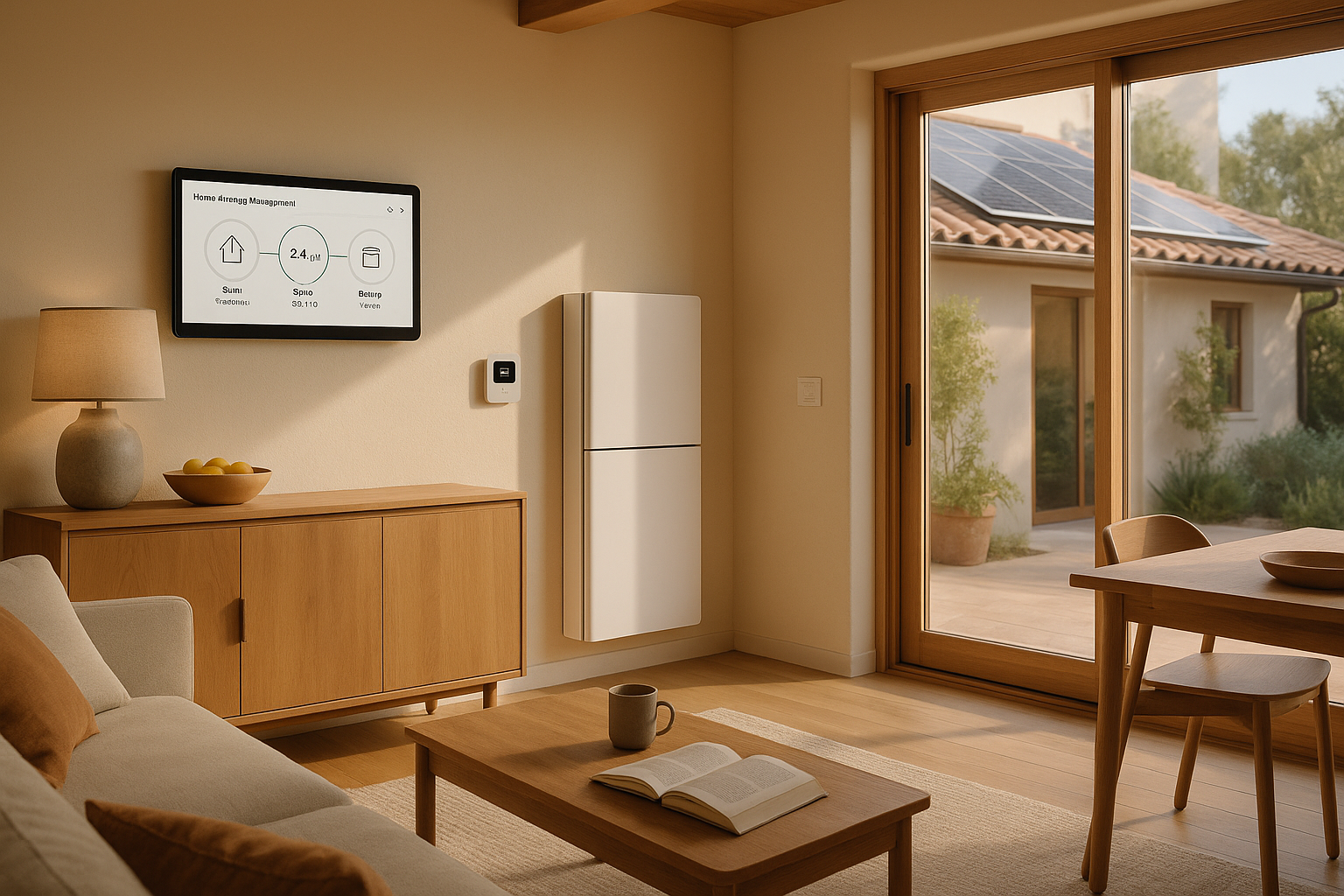

For years, talking about smart homes meant talking about convenience and connected gadgets: automatic blinds, smart thermostats or voice assistants. But the true revolution of the smart home goes much further: it implies that the house manages energy efficiently, learns from the habits of its inhabitants and integrates into the electrical system, optimizing consumption, reducing emissions and actively participating in the generation and storage of electricity.
This leap is based on four pillars: data (sensors), centralized management (a coordinating brain), artificial intelligence (that learns and anticipates) and purpose (efficiency and decarbonization). With the electrification of the main uses (electric vehicle, air conditioning and domestic hot water with heat pump), the reduction and extension of photovoltaics and the impetus of digitalization, the home can produce, store, manage and even sell electricity. It ceases to be a simple point of consumption and becomes an active part of the electrical system, key in the Age of Electricity.
1. Electrification of demand
The new smart home starts by electrifying the uses that weigh the most on the bill: electric car, air conditioning and DHW with heat pump, with solar panels on the roof or nearby. This allows for coordinating consumption and reducing costs, taking advantage of cheap hours or solar energy, and relieving the network during peak hours.
If it is not possible to install panels at home, energy communities and shared self-consumption allow neighbors to produce and distribute electricity collectively, from a community roof, a school or a carport. For tenants, shaded roofs or protected buildings can be a natural entry into self-energy and a ready base for adding batteries and flexibility as a collective.
2.Household batteries
Many households wonder if installing a domestic battery makes sense today. In an average home in Spain, not always. The key is not just the price, but the differential between cheap and expensive hours and, if you have panels, the price at which you are compensated for the surpluses. If midday is very cheap, but the evening is not very expensive, economic arbitrage is limited. The main added value today is resilience: maintaining essential services in the event of a blackout.
Looking ahead, batteries may make sense for three reasons:
- Greater price difference between noon and evening, as solar generation represents more weight in the electricity mix.
- Cost reduction thanks to increased supply and production of batteries.
- Flexibility income: programs that pay for having the battery available or activating it at specific times.
The main value of the battery will not come so much from trying to take advantage of the moments when electricity is cheap or expensive, but from being part of an integrated system that includes solar panels, intelligent consumption management and participation in flexibility services. This set allows for greater savings, optimizes energy use and helps the electricity grid. In addition, public policy tends to smooth out price peaks, so the battery works better as part of an overall system than as an isolated solution.
3. Demand flexibility
Flexibility is probably the most underrated aspect of the new home automation. It’s not about turning off appliances, it’s about deciding when to use energy: the same energy, but at the most efficient time. For the grid, this helps avoid oversizing and reduce the use of expensive generation during peak hours. For the home, it means saving on the bill and, increasingly, generating additional income.
Electric vehicles play a prominent role in:
- V1G: one-way smart charging.
- V2H/V2G: giving energy to the home or the network.
- V2L: power a specific device from the vehicle.
Small flexible consumption (washing machine, dishwasher, dryer) helps to smooth the curve, but the key flexibility is the large uses: air conditioning, domestic hot water and electric vehicles.
Until now, flexibility revenues have been mainly targeted at industry, with very high minimum blocks that made it difficult for private households to participate. Now, the residential sector can come into play thanks to independent aggregators, the capacity market open to demand and storage, and local pilots that relieve congestion. For it to be viable, three elements are needed: stable revenues, scale (many households participating at low costs) and proportionate rules.
Without dynamic pricing, there is no truly “smart” home automation. Indexed and variable rates, which reflect when energy is cheap or expensive, allow the home to make smart decisions and maximize savings.
4.Sensorization, data and AI
For everything to work smoothly, the home must be able to see and act. Seeing implies having reliable data on generation, consumption and temperature. Acting implies advancing or delaying consumption, taking advantage of solar energy and avoiding peaks in demand.
Artificial intelligence is responsible for predicting and planning, making the entire system automatic and discreet.
Artificial intelligence is responsible for predicting and planning, making the entire system automatic and discreet.
This operation is organized into three layers:
- Sensorization: meters and equipment that provide clear and reliable readings.
- HEMS (Home Energy Management System): the “conductor” that applies comfort rules and optimizes costs.
- AI: learns habits, prices and conditions, adjusting decisions to maximize savings and efficiency.
Open solutions like Home Assistant or openHAB enable electrified homes without depending on a manufacturer. Branded ecosystems like Tesla Powerwall, Enphase, SolarEdge or SMA offer “turnkey” experiences. HEMS is also the bridge with aggregators to share availability in residential flexibility schemes.
Home connectivity
A smart home is only as good as its internal connection. Stable Wi-Fi, well-placed access points, and devices with assured coverage ensure that data is reliable and decisions are made on time. Without good connectivity, readings are missed, commands arrive late, and automations fail. That’s why connectivity is the silent infrastructure where telecommunications and energy converge.
Why does home automation matter?
Home automation is no longer a catalog of gadgets but an energy infrastructure. Electrified homes, batteries that maximize panels, rewarded flexibility and data-driven automation transform the home into a useful piece of the system and attractive to the user. Result: more comfort, more savings and fewer emissions.