
When we receive our electricity bill, we pay not only for the energy we have consumed, but also for the time at which we have consumed it. The electricity system has times of high demand —when many households concentrate consumption at the same time— and times when renewable generation is abundant. Energy flexibility consists precisely of adapting consumption to these times: reducing or shifting certain uses when the system needs it and taking advantage of the hours with greater availability of renewable energy or better price signals.
Most Spanish households do not yet have photovoltaic panels, electric vehicles or advanced energy management systems. However, there is enormous potential for flexibility in homes with moderate consumption and contracted power of between 3 and 7 kW. If we want flexibility to stop being an opportunity reserved for a minority and become a massive reality, we must start precisely with these households. This is where the concept of domestic microflexibility appears.
Microflexibility is about leveraging small adjustments in everyday consumption to generate value for both the consumer and the electricity system. Individually, the impact may seem limited. But when thousands or millions of households participate in a coordinated manner, the result can be very significant.
The first step is to understand how each household consumes. Consumption data, tariffs, time patterns and user preferences allow us to identify optimization opportunities. This first layer can translate into personalized recommendations, warnings or suggestions to reduce costs and improve efficiency.
But real flexibility appears when these recommendations can be turned into actions.
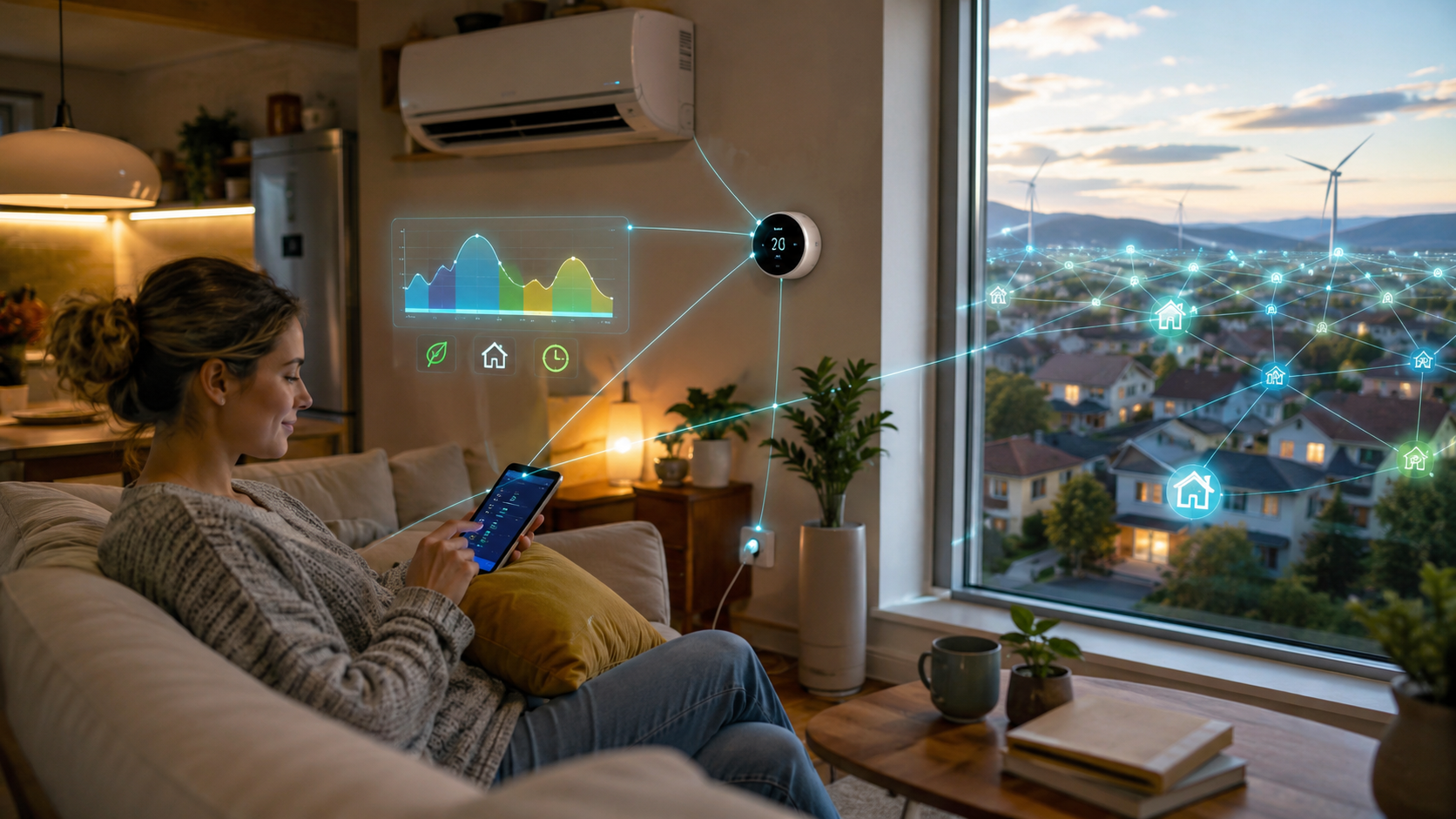
To achieve this, some mechanism is needed that can act on devices behind the meter. It could be a climate control controller, a smart plug, a relay or a home energy management system. The goal is not to completely transform the home, but to incorporate simple tools that allow you to manage certain consumption without affecting comfort.
Air conditioning is probably the best example. It is one of the most important consumptions in many homes and, at the same time, offers a wide scope for intelligent management. Small adjustments in temperature or operating times can generate savings and flexibility without the user perceiving significant changes.
This approach also allows for a different relationship between the energy supplier and the customer. Historically, the relationship has been limited mainly to the bill. Microflexibility opens the door to a relationship based on services, guidance and support in making energy decisions.
However, technology is not enough. Any microflexibility proposal must be built on trust. Users must remain in control of their devices, understand what is happening, and be able to activate or deactivate the service when they see fit.
Consent, transparency and simplicity are as important elements as algorithms or connected devices.
For this reason, at ERIA InnoHub we explore solutions capable of combining data, automation, user experience and customer control to bring energy flexibility to the majority residential market. The challenge is not only to identify potential flexibility, but to convert it into activatable and scalable flexibility.
The residential flexibility of the future will probably not start with a perfectly electrified home. It will start with millions of small decisions and small actions on everyday consumption. And this is precisely where microflexibility can play a decisive role.